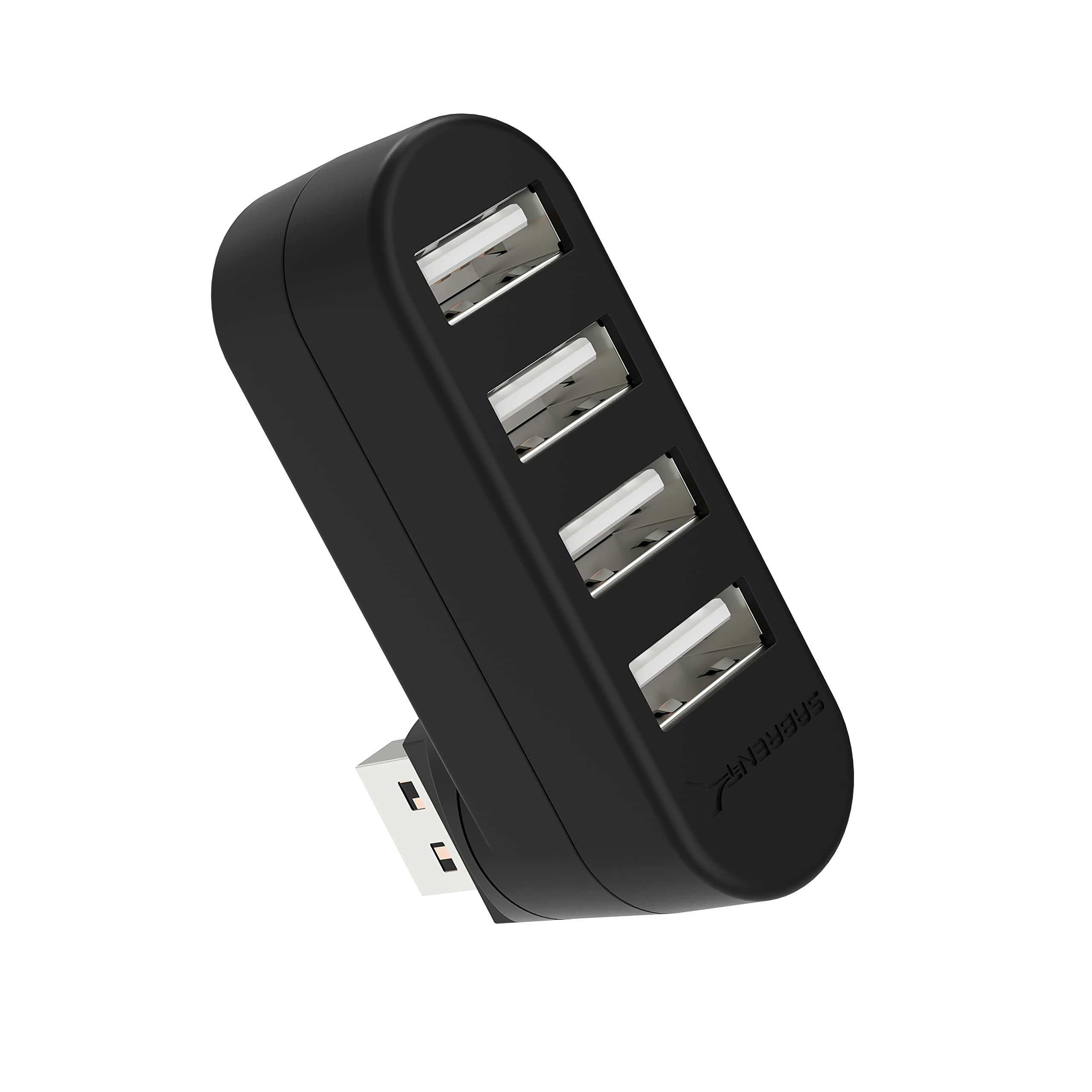
The SABRENT 4 Port USB 2.0 Hub review is for anyone who needs a simple way to add several USB connections to a compatible computer or device.
Its compact build and rotatable connector are useful when desk space or port orientation matters, while its USB 2.0 design is best suited to everyday peripherals rather than charging.
SABRENT USB Hub Review Summary
The quick verdict
16,000+ ratings
Read Amazon ReviewsSABRENT 4 Port USB 2.0 Hub
A compact, rotatable four-port hub for buyers who need extra USB 2.0 connections for peripherals and do not need charging through the hub.
- Four USB 2.0 ports for adding connections to a compatible device.
- Rotatable USB connector adjusts through 90 or 180 degrees.
- Listed maximum data transfer rate of 480 megabits per second.
- Compact, lightweight form intended for portability.

Pros
- Adds four ports in a small, travel-friendly form.
- Rotating connector can make placement easier around a crowded port area.
Consider before buying
- Charging is not supported, so connected devices should not rely on it for power replenishment.
- USB 2.0's 480-megabit-per-second maximum is less suitable for frequent large file transfers than newer USB standards.
Read the full review summary
This hub adds four USB 2.0 ports through a lightweight, compact design. The USB connector can rotate 90 or 180 degrees, which may help the hub sit more conveniently when the host port faces an awkward direction.
Setup is described as plug and play, with hot swapping and hot plugging supported.
It is a straightforward option for a keyboard, mouse, or other compatible USB accessories when four additional connections are enough. The key constraint is explicit: charging is not supported.
Its maximum listed data rate is 480 megabits per second, so buyers connecting storage should consider whether USB 2.0 fits their workflow.
The buying factors
SABRENT USB Hub Scorecard
Editorial scores reflect listed features and buyer fit; they are not laboratory measurements or customer ratings.
Port expansion
Four additional USB 2.0 ports give a useful amount of expansion for a small peripheral setup.
Port flexibility
The connector rotates 90 or 180 degrees, offering options for how the hub sits at the host port.
Portability
The compact, lightweight design is convenient to carry or keep in a small workspace.
Setup simplicity
Plug-and-play setup and hot swapping make it suitable for routine connection changes.
Data speed fit
The listed maximum of 480 megabits per second suits basic USB 2.0 uses but is a limiting factor for speed-sensitive storage work.
Charging support
Charging is explicitly not supported, so it cannot serve buyers looking for a charging hub.
Key Features and Specifications of SABRENT USB Hub
- Four USB 2.0 ports for adding connections to a compatible device.
- Rotatable USB connector adjusts through 90 or 180 degrees.
- Listed maximum data transfer rate of 480 megabits per second.
- Compact, lightweight form intended for portability.
- Plug-and-play setup, with hot swapping and hot plugging supported.
- Compatible with Windows, Mac, and Linux systems, according to the supplied product information.
Pros and Cons of SABRENT USB Hub
Pros
- Adds four ports in a small, travel-friendly form.
- Rotating connector can make placement easier around a crowded port area.
- Simple setup is a good fit for common peripheral connections.
- Supports use across Windows, Mac, and Linux systems.
Consider before buying
- Charging is not supported, so connected devices should not rely on it for power replenishment.
- USB 2.0's 480-megabit-per-second maximum is less suitable for frequent large file transfers than newer USB standards.
- A four-port hub may not be enough for a workstation with many accessories; count the devices you expect to connect before choosing.
Who Should Buy SABRENT USB Hub?
Good fit
Consider this hub if you mainly need extra connections for everyday accessories such as a keyboard, mouse, or other compatible USB devices.
Its small footprint and rotating connector make it particularly practical when a laptop or desktop port is difficult to reach or sits close to other equipment.
It also makes sense for a lightweight travel setup where simple plug-and-play expansion matters more than high-speed storage access.
Before buying, check that the host device uses a compatible USB connection and that the devices you plan to attach do not need charging through the hub.
Who should skip it
Choose a different type of hub if you need USB charging or regularly move large files through connected storage. The listed speed ceiling is 480 megabits per second, and charging is not supported.
If your setup regularly needs more than four extra connections, map out the peripherals you use at once and compare with a higher-port option.
How the SABRENT USB Hub Fits a Simple Setup
A compact way to add ports
Four ports can cover the basic expansion needs of a desk or travel kit without requiring a large hub.
The lightweight form also makes it easier to keep the adapter with a laptop bag or move it between workspaces.
Rotation helps with placement
The connector's 90- and 180-degree rotation gives some flexibility when a host port points in an inconvenient direction.
This can help position the hub around nearby cables or equipment, though buyers should still check that the intended port area has enough physical clearance.
USB 2.0 shapes the workload
The listed maximum rate of 480 megabits per second places this model in the USB 2.0 class.
That is a sensible match for many basic peripherals, while buyers who routinely transfer large files should weigh the slower interface against their workflow.
A peripheral hub, not a charger
Charging is not supported, which makes the hub's role clear: it expands connectivity for compatible USB devices.
If a phone or other accessory must recharge at the desk, plan for a separate charging connection or choose a hub designed to support charging.
Alternatives to SABRENT USB Hub
USB Hubs alternative
2,000+ ratings
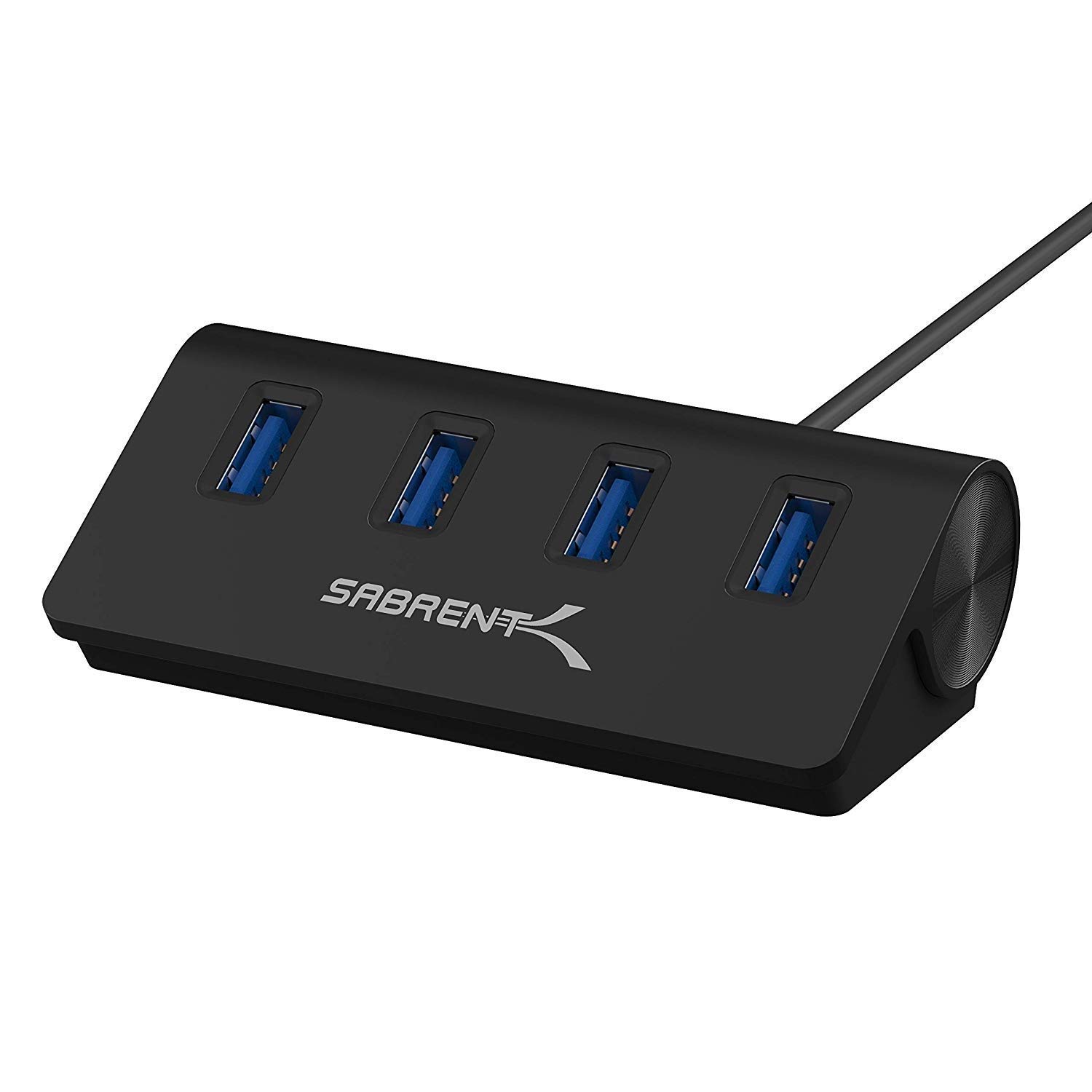
Read Amazon ReviewsSABRENT 4-Port Aluminum USB 3.0 Hub (HB-MC3B)
Choose the main hub if its rotating connector and compact USB 2.0 design suit your setup. Consider the HB-MC3B if four ports are still enough but faster transfers or a longer cable matter more.
- The HB-MC3B also provides four ports, with USB 3.0 data rates up to 5 gigabits per second, backward compatibility with USB 2.0 and 1.1, and a 2.5-foot cable.
- The SABRENT 4 Port USB 2.0 Hub provides four ports in a compact form and lists a 480-megabit-per-second maximum data rate.
USB Hubs alternative
9,000+ ratings
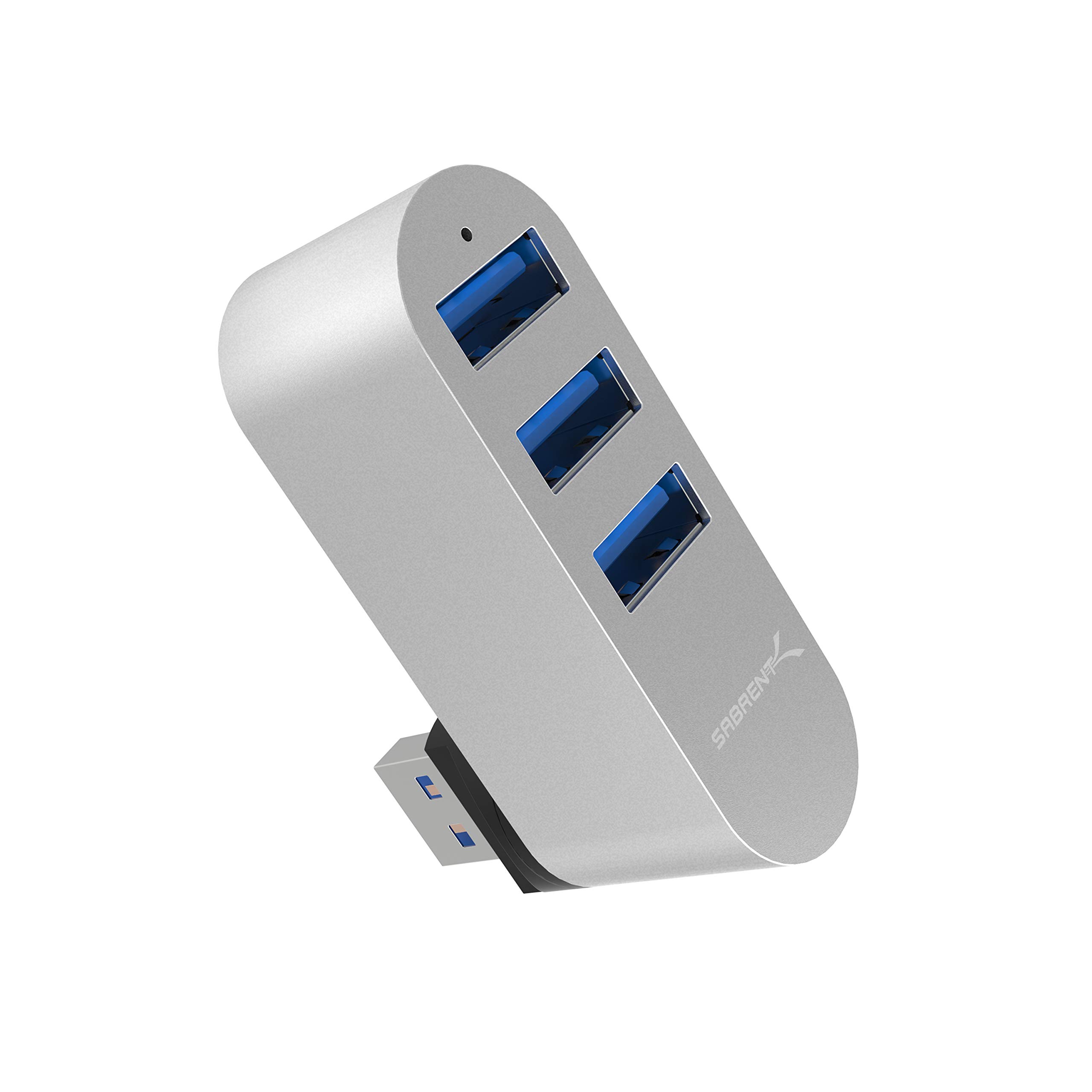
Read Amazon ReviewsSABRENT Premium 3 Port Aluminum Mini USB 3.0 Hub (HB-R3MC)
The main hub gives you one more port in a lightweight USB 2.0 design. The HB-R3MC is worth considering if three ports are sufficient and you prefer its aluminum build and USB 3.0 interface.
- The HB-R3MC is a compact aluminum USB 3.0 hub with three ports and a similarly rotatable connector; its description emphasizes compatibility with Apple computers as well as Windows, Mac, and Linux systems.
- The main hub offers four USB 2.0 ports and a lightweight design, with a connector that rotates 90 or 180 degrees.
Is SABRENT USB Hub Worth It?
The SABRENT 4 Port USB 2.0 Hub is worth considering when the goal is uncomplicated port expansion for everyday peripherals. Its four ports, rotating connector, portability, and simple setup suit a compact work or travel setup.
Keep the limits in view: it does not support charging, and its 480-megabit-per-second maximum is a modest fit for data-heavy work.
If those tradeoffs match your needs, it is a practical basic hub; if not, prioritize a faster or charging-capable design.
Your review at a glance
16,000+ ratings
Read Amazon ReviewsSABRENT 4 Port USB 2.0 Hub
A compact, rotatable four-port hub for buyers who need extra USB 2.0 connections for peripherals and do not need charging through the hub.
- Four USB 2.0 ports for adding connections to a compatible device.
- Rotatable USB connector adjusts through 90 or 180 degrees.
- Listed maximum data transfer rate of 480 megabits per second.
- Compact, lightweight form intended for portability.